
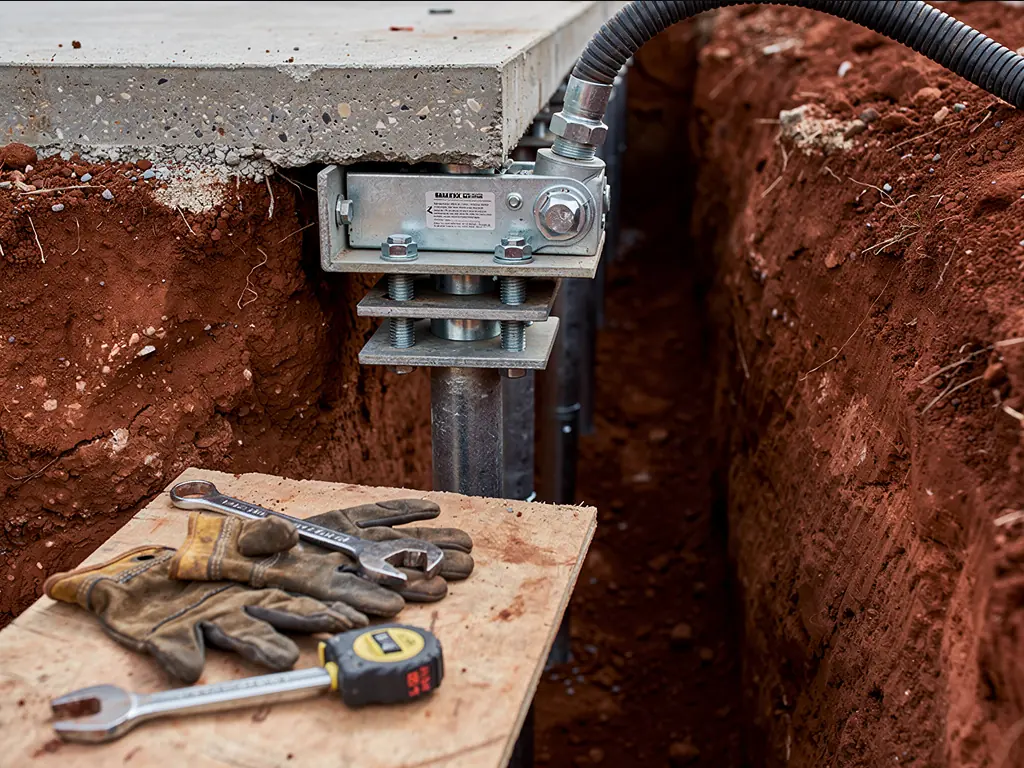
Slab foundation repair
A concrete slab rests right on the soil, so it rides every swing in soil moisture. When part of a slab drops or heaves, the usual fix is piers placed under the beam of the slab to lift it back toward level and hold it there. The pro measures the floor first so the plan matches the actual low spots. Details are on the slab foundation repair page.
Pier and beam foundation repair
A house with a crawl space rests on piers and wood beams. Floors get bouncy or slope when a pier settles, a shim works loose, or a beam rots. Fixes run from re-shimming to adding piers or replacing beams. See pier and beam foundation repair.
Foundation crack repair
Cracks in the slab, brick or drywall are the most visible sign of movement. Some only need sealing. Others point to movement that has to be stopped before patching makes sense. Foundation crack repair explains how pros tell the two apart.
Foundation inspection
An inspection is the step before any quote. The pro checks floor elevations, doors, cracks inside and out, and how water drains around the house. If you are buying, selling or just worried, a foundation inspection is the calm first move.
Drainage correction
The clay soils around Frisco are what the USDA calls Vertisols: they swell as they get wet and shrink as they dry. Gutters, grading and French drains keep that moisture more even. Drainage correction is often what makes a repair last.
For price ranges on all five, see the foundation repair cost guide.