
Which cracks this covers
This page covers cracks in the exposed edge of a concrete slab, in exterior brick and mortar, and the drywall and tile cracks inside that often travel with them. Frisco homes on clay see all three. The soil swells after heavy rain and shrinks in long dry stretches, and the house flexes a little each time.
Cracks that need a closer look
Angi's crack guide gives a simple way to sort them.
- Vertical cracks are the most common and are rarely a sign of structural damage. They often come from shrinkage as concrete cures.
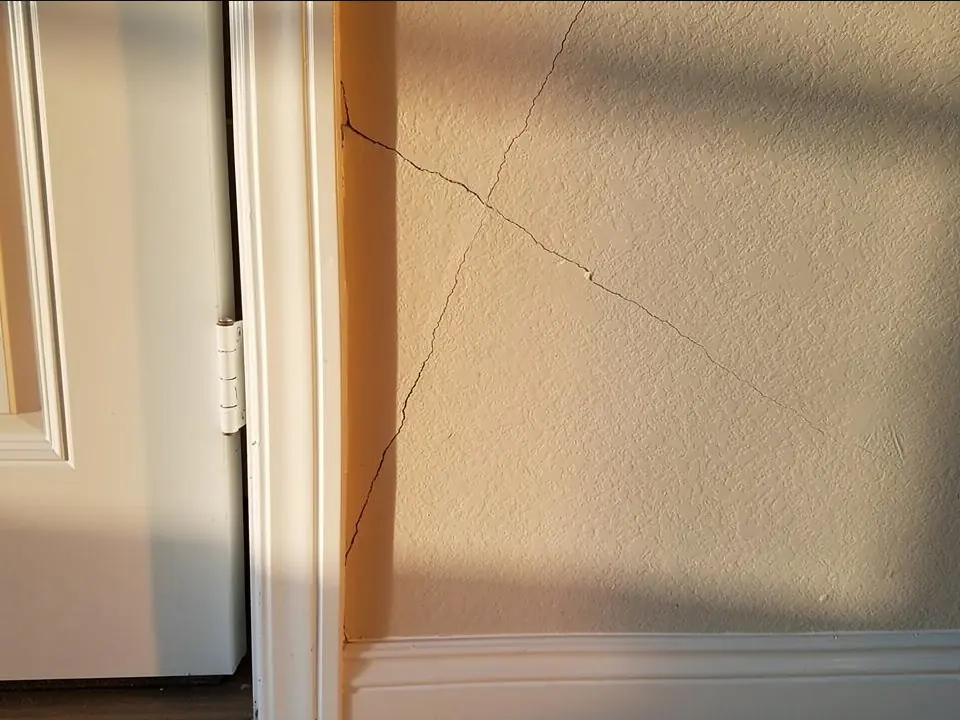
- Diagonal cracks that stay hairline thin, under about an eighth of an inch, may be settling or shrinkage. Wider ones can point to structural movement or differential settling.
- Stair-step cracks that follow the mortar in brick are more worrying than vertical ones.
- Horizontal cracks are among the most serious types.
- Any crack that is getting longer, wider or deeper is an active crack and worth an expert's look.
Do a simple test at home. Mark each end of the crack with a pencil, write the date, and measure the width with a ruler or a coin. Check again in a month and again after the next big swing in weather. Photos with a tape measure in the frame help the pro too.
Inside, look at the same wall. A crack in the slab edge that lines up with a diagonal drywall crack and a sticking door is a pattern, not a coincidence.
How crack repair is done
- Look and measure. The pro inspects the crack, measures it, and checks the house around it: floor readings, doors, and other cracks on the same side.
- Decide the cause. If the crack is old and stable, sealing may be the whole job. If the area is still moving, the pro will recommend slab foundation repair or drainage work first.
- Clean and prep. Loose material is removed so the repair material bonds to sound concrete or masonry.
- Seal or inject. Angi notes that epoxy is stronger and generally preferred, while polyurethane foam handles wet or leaking cracks better and cures faster. Brick cracks are usually repointed with fresh mortar.
- Recheck. The pro marks the repair so you can watch it, and many recommend a follow-up look after a full season of wet and dry weather.
Crack repair costs
These ranges come from Angi's 2026 cost guides. They are not quotes. An on-site look sets the real price.
| Item | Reported range | Area |
|---|---|---|
| Foundation crack repair | $250 to $800 | National |
| Crack repair | $500 to $4,300 | Dallas |
| Sealing a crack | $200 to $800 per crack | National |
| Epoxy material | $8 to $12 per square foot | National |
| Polyurethane foam material | $8 to $25 per square foot | National |
| Structural report | $300 to $1,000 | National |
If the crack is a symptom of settlement, the bigger number is the pier or drainage work, not the sealing. The foundation repair cost page covers those ranges.
Repairs, paperwork and selling
Keep records of any crack repair, even a small one. The current TREC Seller's Disclosure Notice asks Texas sellers about foundation and slab defects, settling or soil movement, and previous structural repair. Dated photos, the pro's written scope and any warranty make that conversation with a buyer much easier.
What to ask the pro
- Is this crack active or stable, and how can you tell?
- Is sealing enough, or is there movement behind it?
- Which material will you use and why?
- Is there a warranty on the repair, and what would void it?
- Should I have a foundation inspection first?
To have a local pro look at the cracks you are watching, use the form.